
Ultimate Guide to Website Development for Small Businesses in South Africa
Website Development in South Africa
Website development in South Africa means building a fast, secure, mobile-friendly website that brings you customers. This guide explains what small businesses need, what it costs, which features matter and how to choose the right website development company.

Why every small business needs professional website development
In South Africa, most customers check a business online before they call, message or visit. If your website is slow, outdated or hard to use on a phone, they move on to the next result.
A professional website builds credibility, shows up when people search on Google and gives customers an easy way to contact you. It works for you around the clock, answering questions, showing your work and turning visitors into calls, WhatsApp messages and quote requests.
Good website development covers far more than how a site looks. It includes how fast it loads, how well it works on mobile, how secure it is, how easily you can update it and how well Google can understand it.
This guide walks through each part, so you can plan your project and choose a website development company with confidence. It is long on purpose. Website development is a big decision for a small business, and the more you know before you speak to a developer, the better the result.
If you would rather talk it through, book a free consultation and we will recommend the right solution for your business.
Who this guide is for
This guide is written for South African business owners who are about to build their first website, replace one that no longer works, or add an online shop to an existing business. You do not need any technical background. We explain the terms as we go, because the more you understand about how a website is built, the better questions you can ask and the better decisions you can make about your budget.
If you run a plumbing company in Johannesburg, a salon in Pretoria, a consulting practice in Sandton or a start-up in Cape Town, the same principles apply. Your customers search on Google, compare a few options on their phones, and contact the business that looks trustworthy and makes it easy to get in touch. Your website decides whether that business is yours.
What you will learn
We cover what website development actually includes, the different types of website you can choose from, how responsive design works for South African mobile users, which features matter most, how to build a website that converts and ranks, what affects the price, how to choose a developer, the mistakes that cost businesses the most, and how to look after your site after launch. Use the contents list below to jump to any section.
What is website development?
Website development is the work of building and running a website: the code, the content system, the hosting and the features that make it work.
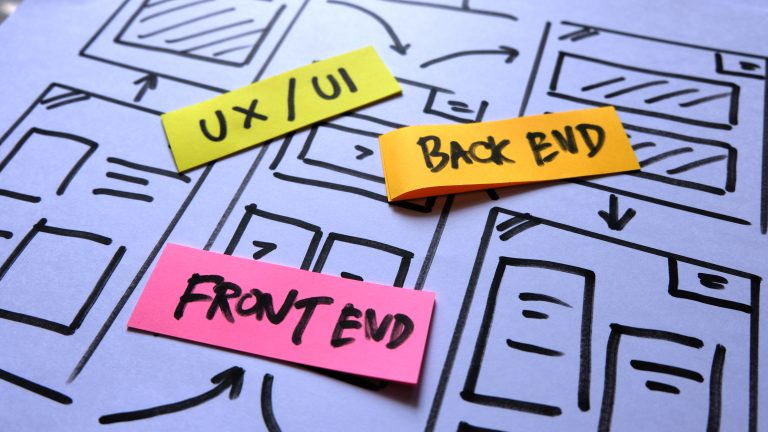
Front-end development
Everything your visitors see and use: layout, text, images, menus, buttons and forms, built so the site looks right and works smoothly on every screen.
Back-end development
The part that works behind the scenes: your database, forms, bookings, payments, user accounts and the server your site runs on.
Content management system
A CMS such as WordPress lets you update pages, blog posts and products yourself, without calling a developer for every change.
Responsive design
One website that adapts to phones, tablets and desktops, so nobody has to pinch and zoom to read your pages or contact you.
Hosting and security
Your site needs reliable hosting, an SSL certificate, backups and security protection, so it stays online and your visitors’ details stay safe.
SEO foundations
Clean code, fast loading, sensible page structure and proper titles and descriptions, so Google can understand and rank your pages.
Front-end and back-end development in plain English
Think of a website as a shop. The front end is the shopfront and the shop floor: the windows, the layout, the signs, the shelves and the till point. It is everything your customers see and touch. The back end is the stockroom, the office and the security system: the database that stores your products and enquiries, the server that delivers your pages, and the tools you use to run it all.
That is why a good website needs both to work well. For example, a beautiful front end on a weak back end gives you a site that looks great but loads slowly, breaks when you add a product or loses enquiry forms. Likewise, a powerful back end with a poor front end gives you a site that works but that nobody wants to use. Professional website development means getting both right and making sure they work together.
Design, development and SEO: who does what
Small businesses often hear three terms used interchangeably: web design, web development and SEO. They overlap, but they are different jobs. Web design is the visual and user experience side: layouts, colours, fonts, images and how a visitor moves through your pages. Web development is the technical build: turning the design into a working site with forms, speed, security, a content system and any special features. SEO, or search engine optimisation, is the work of making sure Google can find, understand and rank your pages for the searches your customers make.
Overall, the best results come when all three are planned together from the start. When SEO is added after the site is built, you often discover that the structure, page speed or headings need to be redone. That is why we plan keywords and page structure before a single page is designed.
Why a content management system matters
When a developer builds your site on a content management system (CMS) such as WordPress, you get a simple dashboard where you can change text, upload images, add blog posts and update prices yourself. Without one, every small change means paying someone to edit code. For a growing small business, being able to update your own site is worth a great deal, and it is one of the reasons WordPress is so widely used.
Why you must own your website
Whatever platform you choose, make sure the domain name, the hosting account and the website files are registered in your name. For example, some developers keep these in their own accounts, which can make it very difficult to move your site if you ever want to change provider. Ownership is not a technical detail, it is a business protection, and we cover it again in the section on choosing a developer.
Web design decides how your site looks and feels. Web development makes it work. A good website development company in South Africa handles both, so your site looks professional and performs well. Learn more about our web design and development services.
Types of website development for South African businesses
Not every business needs the same kind of site. Here are the main options and who each one suits.
Business websites
A professional site of a few to a dozen pages that presents your services, builds trust and makes it easy to call, WhatsApp or book. This is what most small businesses need.
WordPress websites
The most popular choice for small businesses. Flexible, easy to update yourself and compatible with SEO tools, forms and plugins.
Online shops with WooCommerce
A full e-commerce website with product pages, secure payments, delivery options and stock management, built on WordPress.
Custom website development
Bespoke features built around your process: quoting tools, booking systems, client portals, calculators and integrations with the software you already use.
Startup websites
A focused, fast site that explains your offer, validates your idea and can grow page by page as your startup does.
Website redesigns
A fresh, faster, mobile-friendly rebuild of an outdated site that keeps what already ranks and fixes what does not.
How to decide which type of website you need
The right type of website depends on what your business needs the site to do. Start with the goal, not the technology. If your main aim is to get phone calls and quote requests, a business website with clear service pages is usually enough. For businesses that sell products, an online shop is the answer. When clients need to log in, book appointments or use a calculator, you are looking at custom development. Finally, a focused start-up site is the sensible place to begin if you simply want a strong first presence while you validate an idea.
Template or custom design?
Many small business websites begin with a professionally built template that is then customised with your branding, content and images. This is faster and more affordable, and it can look excellent when it is done well. Fully custom design starts from a blank canvas and is shaped entirely around your brand and your customers. It takes longer and costs more, but it gives you a look that nobody else has and more freedom to build exactly the experience you want.
However, neither is automatically better. The best choice depends on your budget, your timeline and how much your brand image matters to winning customers. Above all, what matters is being honest about which one you are paying for. A template sold as custom design is one of the most common complaints we hear about website developers.
WordPress or fully custom code?
WordPress runs a large share of the websites on the internet, and for most small businesses it is the right choice. It is flexible, it has a huge range of tools for SEO, forms and e-commerce, and many developers can work with it, which protects you if you ever change provider. On the other hand, fully custom code makes sense when you need functionality WordPress cannot handle well, such as a complex booking engine or a platform with unusual business rules. For everything else, WordPress is usually the more economical and easier-to-maintain option.
When an online shop makes sense
If you sell physical or digital products and want customers to order and pay online, you need an e-commerce site. On WordPress, this is usually built with WooCommerce. However, a good online shop is more than a product list. It includes clear product pages, secure payment, delivery options, stock tracking, order emails and a checkout that is quick and simple on a phone. Every extra step in the checkout costs you sales, so the details matter.
Redesigning an existing website
If you already have a site, a redesign can be the fastest way to improve your results, but it needs care. Because pages that already rank on Google have built up value, a redesign that changes their addresses without proper redirects, or removes content that was earning traffic, can cause your rankings to drop. A good redesign keeps what works, improves what does not, and protects your existing search visibility during the move.

Responsive web design in South Africa starts on the phone
Most South Africans browse the internet on their phones, often on mobile data. A responsive website adapts to every screen size, but it also needs to be light and fast, because heavy pages cost your visitors data and patience.
That is why we use a mobile-first approach. We plan every page for the phone screen first, with big tap-friendly buttons, readable text and a clear call or WhatsApp button, then scale up for tablets and desktops. Google also uses the mobile version of your site when it decides how to rank you, so mobile quality directly affects your visibility.
- Layouts that fit every screen without zooming
- Compressed images and clean code for fast loading
- Tap-to-call and WhatsApp buttons on every page
- Tested on real phone screen sizes before launch
Why speed matters more on mobile data
A page that feels fast on a fibre connection in an office can feel painfully slow on a busy mobile network, and many South Africans think carefully about how much data they use. Large unoptimised images, heavy scripts and too many plugins all slow your site down. In fact, visitors do not wait. If the page does not appear quickly, they go back to the search results and choose a competitor.
Speed is also a ranking factor. Google measures how quickly your pages load and how stable they feel, and those measurements, known as Core Web Vitals, feed into how your pages are ranked. Light images, clean code, good hosting and sensible caching are part of every site we build.
Designing for thumbs, not mouse pointers
Phone users tap and scroll with their thumbs. That changes how a page should be designed. Buttons need to be large enough to tap without mistakes. Text needs to be readable without zooming. Menus need to be simple. Your phone number should be tap-to-call and your WhatsApp button should open a chat in one tap. In short, small design details like these are the difference between a visitor who contacts you and one who gives up.
Test on real devices
A site that looks fine on your desktop can behave differently on different phones, browsers and screen sizes. We test on real screen sizes before launch and check forms, menus, buttons and loading speed, so you do not find out about problems from a frustrated customer.
Essential features for a small business website
These are the building blocks of a website that looks professional, ranks on Google and turns visitors into customers.
Mobile-first layout
Pages that read well and load fast on a phone.
Clear calls to action
Call, WhatsApp, book or request a quote, visible on every page.
Contact and quote forms
Simple forms that send enquiries straight to you.
Fast loading speed
Compressed images and clean code, so visitors do not leave while waiting.
SSL and security
HTTPS, secure forms, backups and protection against common attacks.
Google Maps and reviews
Show where you are and let your happy customers do the selling.
Online shop features
Products, secure payments, shipping and stock tools if you sell online.
Social media links
Connect your website with your social profiles and feeds.
Analytics and tracking
Google Analytics and Search Console, so you can see what works.
Privacy policy and cookie notice
Pages and consent that support POPIA compliance.
Blog or news section
A place to publish helpful content that brings in search traffic.
Easy content editing
Update text, images and products yourself, no developer needed.
The features that do the most work
Every feature on a website should earn its place. These are the ones that consistently matter most for small businesses in South Africa.
Clear calls to action
Your visitor should never wonder what to do next. Every page needs a visible next step: call us, WhatsApp us, book a consultation or request a quote. Placing these in the header, in the body of the page, at the end of each section and in a sticky bar on mobile makes it easy for visitors to act at the moment they are ready.
Contact and quote forms
A short form that goes straight to your inbox gets more responses than a long one. Ask for what you really need, such as name, phone number and a short message, and confirm to the visitor that you have received it. In fact, every extra field reduces the number of people who finish.
Reviews and social proof
Because people trust other customers more than they trust your own marketing, showing real reviews, real work and real results on your site reduces doubt and makes the decision to contact you easier. Pairing a Google Maps listing and recent reviews with your contact details also supports local search.
Security and privacy
An SSL certificate, which gives your site the secure padlock and https address, is the minimum. Beyond that, a secure site needs regular updates, strong login protection and backups. If you collect personal information through forms, you also need a clear privacy policy and sensible consent notices that support compliance with the Protection of Personal Information Act (POPIA). This is general guidance and not legal advice, so speak to a legal professional about your specific obligations.
Analytics and tracking
You cannot improve what you cannot measure, so Google Analytics and Google Search Console should be set up on day one, so you can see which pages attract visitors, which searches bring them and which pages lead to enquiries. Over time, this data tells you where to add content and what to fix.
Building for the South African market
Most website advice is written for the US or Europe. South African businesses have their own realities, and a good developer plans for them.

WhatsApp is how many customers prefer to talk
For a lot of South African customers, WhatsApp is the easiest way to contact a business. A WhatsApp button that opens a pre-written message, placed prominently on every page and in the mobile bar, can generate more enquiries than a traditional contact form. We build WhatsApp links into every site because they lower the barrier to getting in touch.
Local payment options
If you sell online, your checkout should offer payment methods your customers actually use. South African online shops commonly connect to local payment gateways such as PayFast, Ozow or Yoco, alongside card payments and EFT options. The right choice depends on your sales volume, fees and the way your customers prefer to pay, and we help you set it up and test it.
Delivery and courier integration
Also, delivery is a big part of the customer experience in e-commerce. Shop owners can connect couriers and pickup networks so that customers see delivery options and costs at checkout. Clear delivery information on product pages also reduces abandoned carts and support questions.
Reliable hosting
Power cuts and unstable connections are a reality in South Africa, so your website should never depend on a server in your own office. Quality hosting in a professional data centre with strong uptime keeps your site online even when your own power is off. Look for hosting with regular backups, security monitoring and fast servers.
Local SEO and Google Business Profile
Many customers search for a service plus a place, such as a plumber in Randburg or an accountant in Midrand. To show up for those searches, your site needs location-relevant content and your business needs a complete Google Business Profile with consistent name, address and phone details. A website that talks about the areas you serve, in natural language, gives Google the signals it needs to match you to nearby customers.
Ready for a website that works as hard as you do?
Book a free consultation and get a fixed quote based on your project, with no obligation.
How we build websites that turn visitors into customers
Traffic is only useful if it turns into enquiries. Conversion-optimised web design is about making it easy and obvious for the right people to take the next step.
Know the one goal
Decide what a visitor should do on each page: call, message, book or buy. Then design everything around that action.
Say it clearly, fast
Lead with who you help and what you do, in plain words, above the fold, before anyone has to scroll.
Make contact effortless
Put your phone number, WhatsApp button and a short form where people already look for them, including a sticky button on mobile.
Build trust on the page
Real reviews, recognisable work, clear processes and honest answers to common questions reduce doubt.
Remove friction
Fewer form fields, no clutter, quick loading and simple menus mean more visitors finish what they start.
Test and improve
Use analytics and real behaviour to adjust headlines, buttons and layouts over time, rather than guessing.

Page by page: what each page needs to do
A conversion-optimised website is built page by page, with each page given a single clear job.
The homepage
The homepage has to answer three questions in a few seconds: what do you do, who do you do it for and what should I do next. A clear headline, a short supporting line, a prominent call to action and some proof, such as reviews, logos or results, are usually all you need above the fold. Everything else on the homepage should guide visitors toward your main service pages.
Service pages
Each important service deserves its own page. This is where visitors decide whether you are the right fit, and where Google finds the content it needs to rank you for specific searches. A good service page explains the problem you solve, how you solve it, what is included, who it is for, what the process looks like, and answers common questions, all ending with a clear next step.
The contact page
By the time someone reaches your contact page, they are ready to take action. Keep it simple: your phone number, WhatsApp button, a short form and clear expectations about when you will reply. Therefore, anything that slows or distracts them at this point costs you enquiries.
Trust is built in small details
People decide quickly whether a business seems legitimate. Real photos instead of obvious stock images, a clear physical area or address, consistent branding, genuine reviews, a visible privacy policy and fast loading all signal professionalism. Small cues add up. As a result, a website that looks careless makes visitors assume the business is careless too.
Improve it over time
Launching the site is the beginning of the work, not the end. Once you have visitors, you can see where they drop off, which buttons they click and which pages lead to enquiries. Small improvements to headlines, layouts and calls to action, tested over months, often produce better results than a complete rebuild.
Building your website to rank on Google
A website nobody finds will not bring you customers. We plan search engine optimisation into the build, so your site has a strong foundation from launch.
Planned keywords
Each page targets a search your customers actually make, so pages do not compete with each other.
Clean structure
One main heading per page, logical sub-headings, descriptive URLs and internal links that guide visitors and Google.
Speed and Core Web Vitals
Optimised images, light code and good hosting, because slow pages lose visitors and rankings.
Titles, descriptions and schema
Proper page titles, meta descriptions and structured data help your pages stand out in search results.
Local signals
Your name, address and phone details, a Google Business Profile and local content help you appear for nearby searches.
Tracking from day one
Google Analytics and Search Console set up at launch, so you can measure results from the start.
How SEO fits into website development
Search engine optimisation is the process of helping Google understand what your pages are about and showing them to people who are searching for what you offer. It is not a trick or a one-off task. Instead, it is a mix of technical foundations, relevant content and credibility signals, built up over time.
Keyword research and page planning
Before we build a page, we decide which search it should answer. If two pages target the same search, they compete with each other and neither ranks as well as it could. Therefore, planning a clear target for every page avoids this and makes your site easier for Google and visitors to navigate.
On-page foundations
Each page should have one clear main heading, helpful sub-headings, a descriptive page title and meta description, readable URLs and images with useful alt text. Internal links connect related pages and pass authority to your most important ones.
Technical foundations
Fast loading, mobile-friendly layouts, secure https, a clean sitemap and a site that Google can crawl without errors are all technical requirements. Fixing these early is much easier than repairing them after launch.
Content that earns traffic
Helpful, well-organised content that answers real questions is what earns rankings over the long term. Guides like this one, service pages, case studies and FAQs all give Google more to rank and give visitors reasons to trust you.
Be realistic about timing
SEO takes time. A well-built site gives you the foundation, but rankings usually build gradually over months rather than days, and nobody can honestly guarantee a position on Google. Be wary of anyone who does. What you can expect is steady progress when the foundations, content and ongoing improvements are done properly.
Want ongoing help to rank? See our SEO services in Midrand and Johannesburg, or read how we build websites that rank and convert.
Website, SEO and social media from one team
A website works hardest when the rest of your marketing supports it. Search engine optimisation brings the right people to your pages. Social media keeps your brand in front of them. And a well-built website turns that attention into calls, WhatsApp messages and quote requests.
When one team looks after all three, nothing gets lost between suppliers. Your keywords, your content and your branding stay consistent, and you only have one conversation to manage.
- Website built with SEO foundations from day one
- Ongoing SEO services to grow your Google rankings
- Social media marketing to build the brand people search for
- One team, one plan and one point of contact
What affects the cost of website development?
Website prices vary widely, from a few thousand rand for a basic template site to far more for a large shop or custom platform. These are the factors that decide where your project lands.
Number of pages
More pages means more design, writing and testing. A five-page site and a twenty-page site are very different projects.
Custom or template design
Fully custom design takes more time than adapting a template, but gives you a look that is truly yours.
Features and functions
Booking, quoting tools, member areas, multilingual pages and integrations each add build and testing time.
E-commerce scale
The number of products, payment methods, delivery options and stock tools all affect the cost of an online shop.
Content and images
If we write the copy and source the images, it adds to the project. If you supply them, it can reduce it.
SEO, hosting and care
Ongoing SEO, hosting and website management are separate from the build, so you can scale them to your budget.
Why quotes vary so much
Two quotes for a website can differ enormously, and both can be honest. The difference is usually in scope: how many pages, how much custom design, which features, who writes the content, how much SEO is included and what support comes after launch. Comparing price alone without comparing what is included is the quickest way to make a poor decision.
Template versus custom pricing
First, a customised template is generally the most affordable route to a professional site. Fully custom design takes more design and development hours, so it costs more. Next, an online shop adds product setup, payment gateways, shipping and testing. Finally, a custom platform with unique features is the most expensive route because everything is built from scratch.
Watch for hidden costs
Be careful of very cheap offers that charge extra for things you assumed were included, such as mobile design, contact forms, SSL, basic SEO setup or edits. Ask what is included in writing, and what will cost extra. A clear, fixed quote protects both sides.
Ongoing costs to plan for
A website is not a once-off purchase. Plan for your domain name renewal, hosting, security and backups, updates and any ongoing SEO or content work. These are usually modest compared with the build, but they keep the site working and growing, so include them in your budget from the beginning.
Think about return, not only cost
A website that brings in even a few extra customers each month can pay for itself quickly. When comparing options, ask what each will do for your business, not only what it costs. A slightly higher investment in a site that is fast, well structured and built to rank is often cheaper in the long run than a cheap site that has to be rebuilt.
Common website mistakes that cost businesses enquiries
After seeing many small business websites, the same problems appear again and again. Avoiding them can save you months of lost enquiries.
Not owning the domain or hosting
If your developer registered everything in their own name, you can be locked in or lose your site if the relationship ends.
Ignoring mobile
A site that only looks good on a desktop loses most of your visitors.
Slow pages
Huge images, too many plugins and poor hosting make visitors leave before the page loads.
No clear call to action
If visitors have to hunt for a phone number or form, many will simply leave.
Thin or copied content
Generic text that says nothing specific about your business gives neither visitors nor Google a reason to choose you.
Several pages competing for the same search
This splits your ranking power and confuses Google about which page to show.
No analytics
Without data, every decision about your site is a guess.
Redesigning without redirects
Changing page addresses without 301 redirects throws away the rankings your old pages earned.
Never updating
Out-of-date plugins and content make a site slow, insecure and untrustworthy.
How to choose a website development company in South Africa
A website is a big investment. Here is what to look for, and what to avoid, whoever you hire.
Green flags
Live sites you can open and test on your phone
A clear scope and a fixed quote in writing
Fast loading speed on mobile
SEO planned into the build, not added later
You own your domain, hosting and content
Support and website management after launch
Red flags
“R999 website” with costs added later
No say over your domain or hosting
A template sold as custom design
No plan for Google or mobile
Vague deadlines and no clear contact person
No help once the site is live
Questions to ask
Can I see websites you have built, and speak to a client?
Who owns the domain, hosting and website files?
Will the site be mobile-first and how do you test speed?
How will you plan the SEO and keywords?
What is included in the quote, and what costs extra?
What happens after launch if something breaks?
How to compare website proposals
When you collect quotes, put them side by side and compare the same things: number of pages, design approach, features, content, SEO setup, training, support after launch and the timeline. A proposal that is vague on any of these deserves questions before you sign.
Look at real work
Ask to see websites the company has built, open them on your phone and judge them honestly. Are they fast? Do they look professional? Is the contact information easy to find? If possible, speak to a past client about how the process went.
Check the agreement
A professional agreement states what you are getting, the price and payment terms, the timeline, who owns the final website and what happens if something needs changing. It should be clear that you own your domain, hosting account and content. If any of this is unclear, ask for it in writing.
Choose communication as well as skill
Plenty of developers are technically capable. The ones worth hiring also explain things clearly, reply when they say they will and tell you honestly what you need and what you do not. A website project involves many decisions, and good communication makes every one easier.
Prefer to work with a local team? Read about Dynovate Digital’s web design in Midrand or meet the team.
How we build your website: from first call to launch
A clear, repeatable process, so you always know what is happening next.
Discovery
We learn about your business, customers and goals, and review your current site and competitors.
Plan and structure
We map your pages and keywords, so every page has a purpose and a search target.
Design
You see a clean, on-brand design for desktop and mobile before anything is built.
Build and write
We build the site, set up forms and tracking, and finish the copy and images.
Test and launch
We test speed, forms and every screen size, then launch and submit your site to Google.
Support and grow
We track results and keep improving through website management and SEO.
What happens at each stage
Understanding the process helps you prepare and keeps the project on schedule.
Discovery
We start with a conversation about your business, your customers, your competitors and what you want the website to achieve. Then we review any existing site and look at the searches your customers make.
Plan and structure
We map out the pages, the navigation and the keyword target for each page. This is the blueprint, and agreeing it early prevents costly changes later.
Design
You see a design for desktop and mobile before anything is built, with your branding, colours and imagery applied. This is the moment to give feedback on look and feel.
Build and write
We build the pages, set up forms, tracking and any special features, and finish the copy and images. Delays here are most often caused by waiting for content, so we tell you exactly what we need and when.
Test and launch
Before launch we test speed, forms, links and every screen size. After launch we submit your site to Google so it can start being crawled and indexed.
Support and grow
After launch we track results and keep improving through website management and SEO, so the site continues to earn its place in your business.
What we need from you
The smoother and faster the project, the more prepared you are. Gather your logo and brand colours, a list of your services, any photos of your work or team, reviews you can use, and examples of websites you like. If you would rather not write the copy yourself, we can help with that too.
How long does a website take? It depends on the size of the project and how quickly content and feedback come in. Smaller sites can go live in a few weeks. Larger shops and custom builds take longer. We give you a timeline with your quote.
Website maintenance and optimisation
Launch day is the start, not the finish. A website that is not looked after becomes slow, insecure and out of date.
Updates
WordPress core, themes and plugins need regular updates to stay secure and compatible.
Backups
Regular backups mean a problem never costs you your whole website.
Security checks
Malware scans, login protection and firewall rules keep attackers out.
Speed checks
Images, plugins and hosting are reviewed so your site stays fast as it grows.
Analytics reviews
Monthly checks of traffic, enquiries and top pages show what to improve next.
Content updates
New services, prices, photos and blog posts keep your site fresh for visitors and for Google.
Why a neglected website becomes a risk
Websites age. Software changes, browsers update and attackers look for outdated plugins. As a result, a site that was fast and secure at launch can, within months, become slow and vulnerable if nobody looks after it. Maintenance is not an optional extra, it is what keeps your investment working.
A simple maintenance routine
Each month, a healthy routine includes updating the platform and plugins, checking backups, scanning for security issues, testing forms and checking speed. Every few months, review analytics to see which pages are working, add content to match the searches your customers are making and refresh outdated information such as services, prices and team details.
Keep your content fresh
Google also likes sites that are kept current, and visitors trust them more. Adding new blog posts, updating service pages, publishing new work and responding to reviews all signal that your business is active and engaged. A steady stream of useful content also gives you more chances to rank for the searches your customers make.
Our website management covers all of this, so you can focus on running your business. Ask us about website care.
Website development for businesses across South Africa
Local knowledge in Gauteng, with a process that works anywhere in the country.



We are based in Midrand and work remotely with small businesses across Gauteng and the rest of South Africa, including Johannesburg, Sandton, Pretoria, Centurion, Fourways and Randburg. Calls, video meetings and WhatsApp mean you get the same clear communication wherever you are.
Being based in Midrand means we understand the Gauteng market well. Because everything from design reviews to launch can be done remotely, we work equally well with businesses in Cape Town, Durban, Gqeberha and across the country.
If you are in or near Midrand and want a local team, see our web design in Midrand page for packages and examples.
For businesses elsewhere in South Africa, the process is the same: a free consultation, a clear recommendation and a fixed quote. Tell us about your project and we will take it from there.
Book your free website consultation
Tell us about your business and what you want your website to do. We’ll recommend the right solution and give you a fixed quote.
Book your consultation todayWebsite development in South Africa: your questions answered
Cost and timing
How much does website development cost in South Africa?
It depends on the size of the project. A basic template site costs far less than a custom website, a large online shop or a platform with booking and member features. The main factors are the number of pages, custom or template design, features, e-commerce scale, content and ongoing SEO and care. We give you a fixed quote after a free consultation, so you know the full cost before we start.
How long does it take to build a business website?
Smaller business websites can often go live within a few weeks once content and feedback are ready. Larger sites, online shops and custom builds take longer. The biggest delays are usually late content and slow feedback, so we agree a timeline with your quote and keep you updated.
Do I need to buy hosting and a domain name separately?
Every website needs a domain name, such as yourbusiness.co.za, and hosting, which is where the site files live. We can set both up for you in your own name, so you own them and stay in control. Domain renewal and hosting are small ongoing costs that we explain up front.
Design, platforms and features
What is the difference between web design and web development?
Web design is how your site looks and feels: layout, colours, images and user experience. Web development is how it works: the code, speed, forms, shop, security and integrations. A good website development company in South Africa handles both, so your site looks good and performs well.
Should my small business use WordPress?
For most small businesses, yes. WordPress is flexible, easy to update yourself and works well with SEO tools, forms and WooCommerce for online shops. A fully custom build only makes sense when you need functionality that WordPress cannot handle well. We recommend the platform that suits your goals and budget.
Can you build an online shop for my business?
Yes. We build online shops with WooCommerce, including product pages, secure payment gateways, delivery options and stock management. We plan the shop around how your customers buy and how you want to manage orders.
Will my website work properly on mobile phones?
Yes. We design mobile-first, which means we plan every page for phone screens first and then scale up to tablets and desktops. Most South African visitors browse on their phones, so we also keep pages light and fast to load.
Can I update the website myself after it is built?
Yes. We build on WordPress, so you can edit text, change images, add blog posts and update prices from a simple dashboard. We show you how, and you can also hand the updates to us through website management if you prefer.
Can you add a WhatsApp button to my website?
Yes. A WhatsApp button that opens a pre-written message is built into every site we create, and it is placed on the page and in the mobile bar, because many South African customers prefer to message first.
SEO, ownership and support
Will my new website be good for SEO?
We build with SEO in mind from the start: clean structure, fast loading, proper headings, page titles and descriptions, and pages planned around the searches your customers make. Rankings are never guaranteed, but a well-built site gives you the best foundation to be found on Google.
Do I own my website, domain and content?
You should. Before you hire any website developer, confirm in writing that you own your domain, hosting account and content. We set these up in your name, so you stay in control of your website.
Do you offer website maintenance after launch?
Yes. Our website management covers updates, security checks, backups, speed checks and ongoing improvements, so your site stays fast, safe and current after launch.
Getting started
Do you only work with businesses in Midrand?
No. We are based in Midrand and work remotely with small businesses across Gauteng and South Africa, including Johannesburg, Sandton, Pretoria and Centurion. If you want a local team, see our web design in Midrand page.
How do I get started?
Book a free consultation, call 072 189 1196 or message us on WhatsApp. Tell us about your business and what you want your website to do, and we will recommend the right solution and give you a fixed quote.
Ready for a website that brings you customers?
Tell us about your business and what you want your website to do. We’ll reply with a clear recommendation and a fixed quote.