
SEO South Africa | The Complete Guide to Growing Your Business Through Search
If your business is not visible on Google, you are missing opportunities every single day.
Across South Africa, consumers rely on search engines to find products, services, information, and solutions to their problems. Whether someone is searching for a plumber in Pretoria, a lawyer in Cape Town, an e-commerce store in Durban, or professional SEO services in Johannesburg, the journey almost always begins with a search engine.
The challenge is that most businesses are competing for the same attention. Every day, thousands of South African companies invest in digital marketing to attract customers online. While paid advertising can generate immediate traffic, it stops working the moment you stop spending money. Search Engine Optimisation, commonly known as SEO, offers a different approach. It focuses on building long-term visibility that continues to generate leads, enquiries, and sales long after the work has been completed.
This is why SEO South Africa has become one of the most valuable marketing investments a business can make. A well-executed SEO strategy helps your website rank higher in search results, attract qualified traffic, improve brand credibility, and create sustainable growth. Instead of chasing customers, SEO helps customers find you at the exact moment they are searching for your products or services.
However, SEO has changed significantly over the last few years. Ranking a website today involves far more than adding keywords to a page. Google now evaluates user experience, website performance, content quality, trust signals, authority, relevance, and search intent. Artificial intelligence is also reshaping how users discover information online, making it more important than ever for businesses to create genuinely valuable content.
In this comprehensive guide, we will explore everything you need to know about SEO in South Africa. From understanding how search engines work to learning how local SEO, technical SEO, content marketing, and AI search influence rankings, this guide will help you understand what it takes to succeed in modern search.
What Is SEO and Why Does It Matter in South Africa?
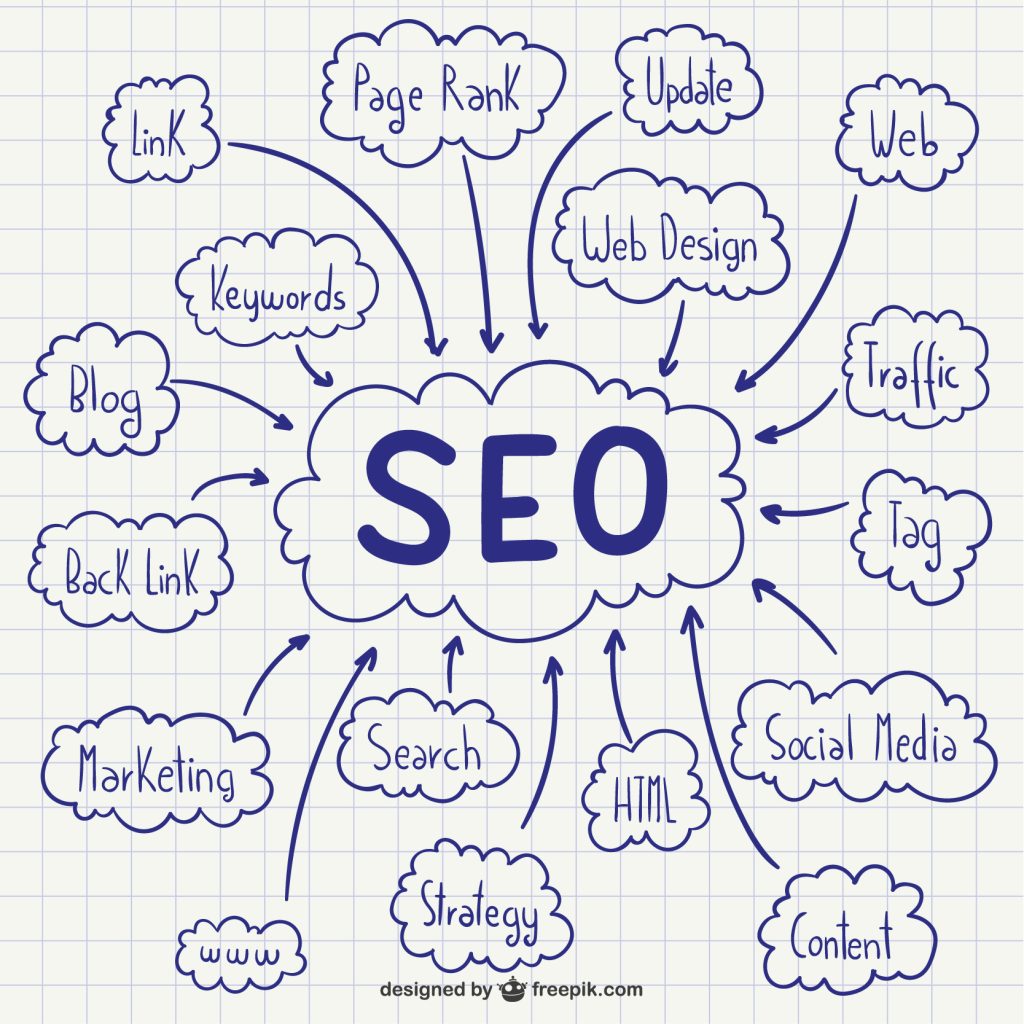
Search engine optimization is the process of improving a website so that it appears more prominently in organic search results. Organic search results are the listings that appear naturally on Google and other search engines, rather than advertisements that businesses pay for.
The primary objective of SEO is simple. It aims to increase visibility for relevant searches so that potential customers can discover your business online. The higher your website appears in search results, the more likely people are to visit your website, engage with your content, and ultimately become customers.
For South African businesses, SEO has become increasingly important because consumer behaviour has fundamentally changed. Before making a purchase, people research products online. Before choosing a service provider, they compare businesses online. Before visiting a store, they search online.
Imagine a homeowner in Sandton searching for “roof repair services” after a storm damages their property. They are unlikely to scroll through ten pages of search results. Instead, they will typically contact one of the businesses that appears on the first page. If your company is not visible, you may never even have the opportunity to compete for that customer.
This applies across virtually every industry. Accountants, attorneys, healthcare providers, construction companies, ecommerce stores, consultants, schools, and marketing agencies all benefit from strong search visibility. Businesses that consistently appear in relevant search results build trust, attract more enquiries, and create a competitive advantage that compounds over time.
SEO is particularly valuable because it targets users with intent. Unlike traditional advertising, where businesses interrupt consumers with promotional messages, SEO connects businesses with people who are actively searching for solutions. These users are often further along in the buying journey, making them more likely to convert into customers.
The Current State of SEO in South Africa
The digital landscape in South Africa has evolved dramatically over the past decade. Internet access continues to expand, mobile device usage dominates online activity, and consumers increasingly rely on digital channels to research and purchase products and services.
For businesses, this shift presents both opportunities and challenges. On one hand, it has never been easier to reach potential customers online. On the other hand, competition has become significantly more intense. Businesses are no longer competing only against companies in their immediate area. They are competing against every organisation targeting the same audience online.
This growing competition has made SEO more important than ever. Companies that invest in search visibility position themselves to capture demand before their competitors do. Those that ignore SEO often find themselves relying heavily on paid advertising, referrals, or traditional marketing methods to generate leads.
Another significant development is the rise of local search. Consumers increasingly search for products and services within specific geographic areas. Searches such as “SEO services Midrand“, “electrician Johannesburg,” or “accountant Cape Town” demonstrate strong commercial intent. Businesses that optimise for local search terms often gain access to highly qualified traffic that is ready to take action.
At the same time, artificial intelligence is changing how search engines present information. Google’s AI-powered search features are providing users with direct answers, summaries, and recommendations. This means businesses must focus on creating comprehensive, trustworthy, and authoritative content that search engines view as valuable enough to feature.
How Search Engines Actually Work
Many business owners understand that SEO is important, but few understand how search engines determine which websites deserve to rank.
Google’s primary objective is to provide users with the most relevant and useful result for every search query. To achieve this, Google uses sophisticated algorithms that analyse billions of webpages and evaluate hundreds of ranking factors.
The process begins with crawling. Search engines use automated bots to discover webpages across the internet. These bots follow links, explore websites, and collect information about the content they find.
Once a page has been discovered, it is added to Google’s index. Think of the index as a massive digital library containing information about websites from around the world. When someone performs a search, Google quickly analyses its index and identifies pages that may satisfy the user’s query.
The ranking process involves evaluating numerous factors. Google examines content relevance, website authority, user experience, page speed, mobile usability, backlinks, internal links, and many other signals. The search engine then determines which pages are most likely to provide value to the user.
This is why SEO requires a holistic approach. Businesses cannot rely on a single tactic to achieve rankings. Success comes from aligning content, technical performance, authority building, and user experience into a cohesive strategy.

Why SEO Is One of the Highest ROI Marketing Channels
Every marketing investment should ultimately contribute to business growth. While different channels can play important roles, SEO consistently delivers one of the strongest long-term returns on investment.
The reason is simple. SEO targets demand that already exists.
When someone searches for a product or service, they have already expressed interest. Unlike display advertising or social media promotions that attempt to create demand, SEO captures users who are actively looking for solutions.
Consider a business offering specialist SEO services in South Africa. A person searching for “professional SEO South Africa” is already researching providers. They are much closer to making a purchasing decision than someone casually browsing social media.
Over time, successful SEO campaigns create a compounding effect. A blog post published today can continue attracting traffic for months or even years. A well-optimised service page can generate enquiries long after it has been created. This ongoing value helps reduce dependence on paid advertising while creating a sustainable source of leads.
Businesses that invest consistently in SEO often find that organic search becomes one of their most profitable customer acquisition channels. Instead of paying for every click, they earn visibility through relevance, authority, and quality content.

The Different Types of SEO Every Business Should Understand
Many people think SEO is a single activity, but it is actually made up of several interconnected disciplines. Understanding these areas helps businesses appreciate what is required to achieve meaningful results.
Technical SEO focuses on the underlying structure and performance of a website. It ensures that search engines can crawl, understand, and index content effectively. Site speed, mobile responsiveness, security, structured data, XML sitemaps, and indexing management all fall under technical SEO.
On-page SEO focuses on the content itself. This includes keyword targeting, content quality, heading structures, meta tags, internal linking, image optimisation, and overall relevance. Strong on-page SEO helps search engines understand what a page is about and who it is intended to serve.
Off-page SEO focuses on building authority. This typically involves earning backlinks from reputable websites, increasing brand mentions, and developing trust signals that indicate credibility.
Local SEO helps businesses appear for geographically targeted searches. For South African companies serving specific regions, local SEO is often one of the most important components of a digital marketing strategy.
Content SEO focuses on creating valuable information that satisfies user intent. Blogs, guides, case studies, service pages, and educational resources all contribute to content-driven SEO success.
The most successful SEO campaigns combine all of these elements rather than focusing exclusively on one area.